
2026.9
ブザンソン・一枚の紙を頼りに。
Besançon — following a single sheet of paper
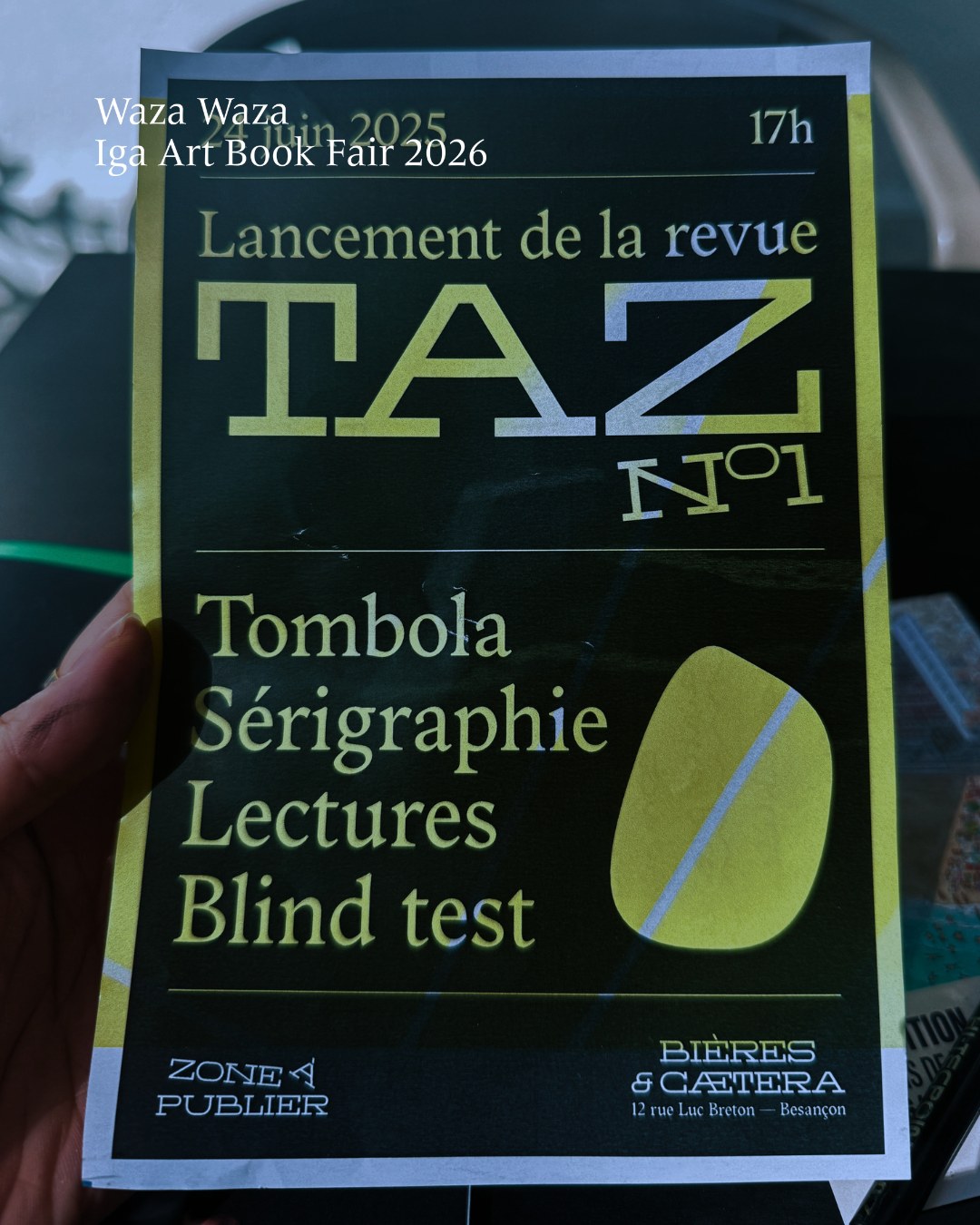
私は2025年、知り合いの『ブザンソンに行ってみるといいよ』という一言で、この街に辿り着き、あてもなくうろうろしていた。いつも新しい街に行くと書店を探して立ち寄ってみる。本屋の一角で今日の日付が書いたイベントであろう紙を拾い上げた。 "ビール"という文字と"17時"というところ以外はさっぱり読めなかったが、住所らしきものは比較的近かったので歩いて行ってみることにした。
たどり着いたのはすごく小さなお店(カウンターで注文して外で飲むようなスタイル)で、外に少しばかり人が集まっていて、小さな催しごとの準備をしていた。
『あのー。この紙を見て来たのですが。』
その紙を私が見つけて来たことにびっくりしたようだった。今日はこの本の出版イベントをしてるんだ。と説明された。
私はちょうどスイス・バーゼルのアートブックフェアの帰りだったこともあり、本を作る仲間を見つけた気持ちになり嬉しくなって喜んだが、向こうは全然喜びを見せてくれなかったので、自分も少し静かになるしかなかった。
そのまま帰るのも悔しいので、前のめりになり居座ってみることにした。ビールももはや注文したのかさえ覚えていない。
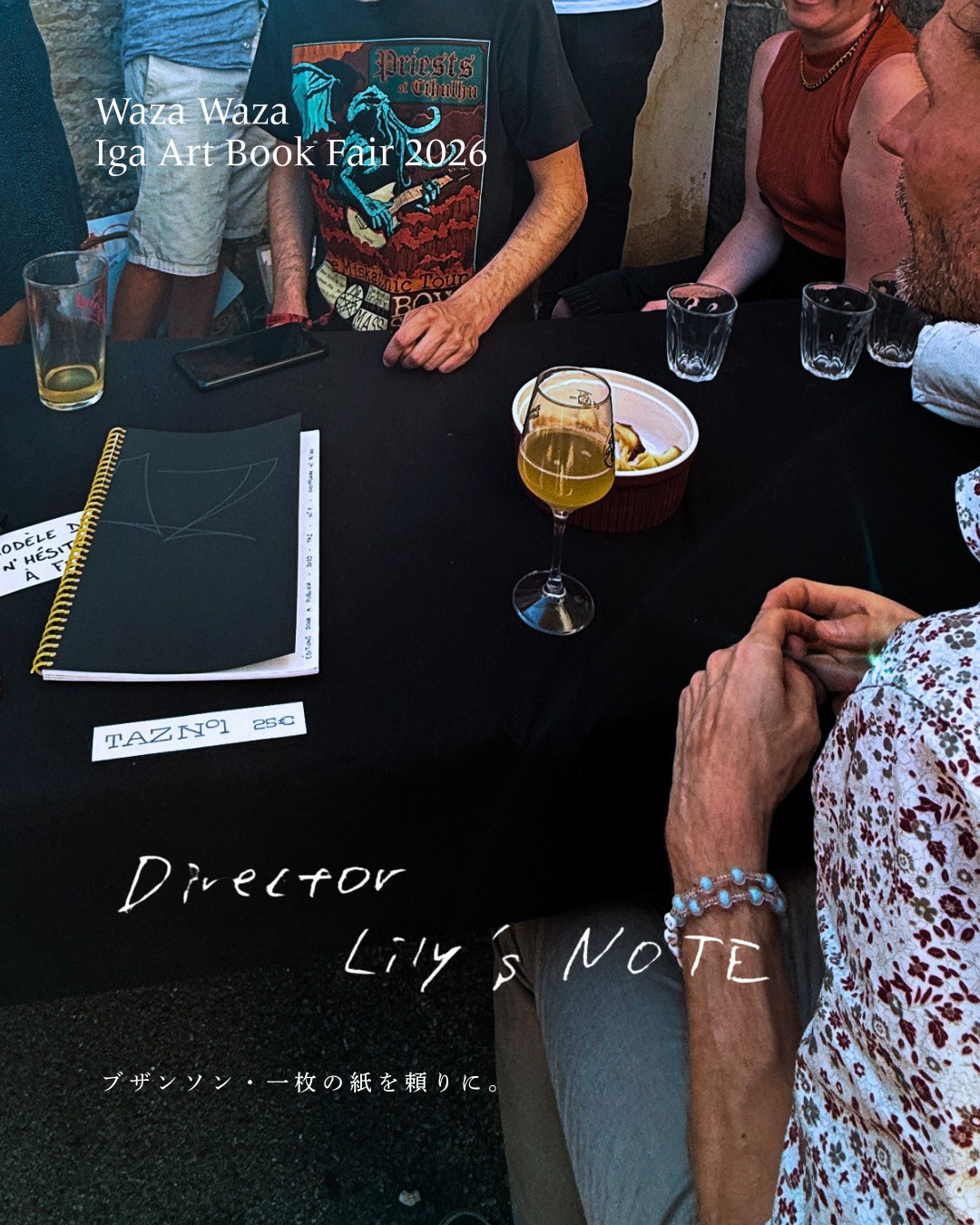
ここには唯一二人ぐらいしか英語を話してくれる人がいなかった。私は私でフランス語がほとんどわからない。私は彼らの本を一冊買いたいと申し出た。そのサクッと本を買う様子に驚いたのか、英語を話せる一人がとても丁寧にこの本について説明してくれた。これはアーティストの集まりで作った本で、これはLucieの作品で、Simsが死ぬ方法を検証したものだとか、僕は親と山に行って親を山に置いて殺人を試みようかと思う男のフィクションを書いたとかだとか、それは英語のせいなのか、本当に中身がだいぶおかしいのかわからなかったが、意味不明だった。家に帰って翻訳してみるよと言ったが、おそらくフランスのユーモアだから理解できないと思うよ。と言われた。とりあいず貴重なことだから、そこにいる人たちにサインをお願いしたら、誰も本にサインをしたことがないのかとても戸惑われ変人扱いされている気分になった。
その英語が話せる一人はBertrand Bellay。彼にこの街で何をしたらいいかと聞くと、なぜかその街以外の場所に行くことを勧められて心底戸惑った。隣町に僕が昔働いていたワイナリーがあるから行くといいよとか、ここからバスに乗っていくと芸術祭があるよとか、なかなか旅慣れた私にも難易度の高い旅のプランを与えられた。終いには良かったら僕の両親の家に泊まりに行くといいと提案されその場で彼の両親と電話をしてぜひ泊まりに行かせてくださいという話になった。彼の家族には大変お世話になった。この時この彼がヒッチハイカーでいつもヒッチハイクで移動していることを知って、壮大な旅の提案がそれ由来であるのかという仮説に紐付いた。
今では作品を交換したり、彼の弟が日本に遊びにきたりする仲になった。そして、いつか2冊目を作る時君も参加するといいよという約束まで交わしたが、その前に私がBertrandを催促して、伊賀にもう一冊この本を届けるように要請した。
ブザンソンで出会ったアーティストたちはパリで活動する作家とはまた違う感じがした。とても控えめで、彼らの作品に日本で、ましてやこの田舎町で出会えることなんてなかなかないのではと思った。だからわざわざここにこの本を連れてくることにすごく意味を感じた。私と同じで理解不能に感じる内容かもしれないが、さまざまなテクノロジーを屈指して読むのもいいだろうし、10年ほどフランス語を勉強して解読する日を楽しみにするのもいいのではないか。
一枚の紙との旅を誰かに続けてもらうのはなかなかワクワクする。
In 2025, on a single remark from an acquaintance — "You should go to Besançon" — I arrived in this town and wandered around with nowhere to be. Whenever I reach a new town I look for a bookshop and step inside. In a corner of one, I picked up a sheet of paper with today's date on it, apparently an event flyer. Apart from the word "beer" and "17:00" I could read none of it, but what looked like an address was fairly close, so I decided to walk there.
What I found was a very small place — the kind where you order at a counter and drink outside. A few people had gathered out front, preparing some small happening.
"Um. I came because of this piece of paper."
They seemed startled that I had found it at all. Today is the launch of this book, they explained.
I had just come back from an art book fair in Basel, so I felt I had found people who make books, and I was glad, and I showed it — but no gladness came back from them, and I had no choice but to go quiet myself.
Going home like that would have galled me, so I leaned in and decided to stay. I no longer even remember whether I ordered a beer.
There were only about two people who would speak English with me. As for me, I understand almost no French. I offered to buy one of their books. Perhaps surprised at how readily I bought it, one of the English speakers explained the book to me very carefully. It was made by a group of artists; this is Lucie's piece, a study of ways to die in The Sims; I wrote a fiction about a man who goes into the mountains with his parent and thinks about leaving the parent there, attempting a murder — whether it was the English or whether the contents really were quite strange, I could not tell, but it made no sense to me. I said I would translate it when I got home; you probably won't understand it, they said, it's French humour. Anyway, since it was a precious thing, I asked the people there to sign it, and they were so bewildered — as if none of them had ever signed a book — that I felt I was being treated as an eccentric.
That English speaker was Bertrand Bellay. When I asked him what I should do in this town, for some reason he recommended places outside it, which thoroughly confused me. There's a winery in the next town where I used to work, you should go; if you take a bus from here there's an art festival — a travel plan demanding even for someone as used to travelling as I am. In the end he suggested I go and stay at his parents' house, and right there he phoned them, and it became a matter of please do let me come and stay. His family took very good care of me. It was then that I learned he is a hitchhiker who always travels by hitchhiking, which tied itself to a hypothesis that the grandness of his travel plans came from that.
By now we exchange works, and his younger brother comes to visit Japan. We even made a promise that when they make a second book, I should take part — but before that, I pressed Bertrand and asked him to send one more copy of this book to Iga.
The artists I met in Besançon felt different from artists working in Paris. Very reserved, and I thought there could hardly be a chance to meet their work in Japan, let alone in this country town. That is why I felt so much meaning in going out of my way to bring this book here. The contents may feel as incomprehensible to you as they did to me; you could read it wielding every technology at your disposal, or you could look forward to the day, some ten years of studying French from now, when you decipher it.
Having someone else carry on the journey of a single sheet of paper — that is rather exciting.