Sukodo · 崇廣堂
会場をめぐるThrough the Spaces
表門を抜けると、瓦と漆喰、木と緑の織りなす二百年の時間に出会う。講堂、外観、玄関の間、渡り廊下、北控所、そして土間に残るかまど。六つの場面で、崇廣堂の今を歩いてみる。
Past the front gate, two centuries surface in tile and plaster, in timber and greenery. The lecture hall. The exterior. The entrance wing. The covered walkway. The north antechamber. The kamado still standing in the kitchen. A walk through Sukodo today, in six vignettes.
01 / Lecture Hall
講堂
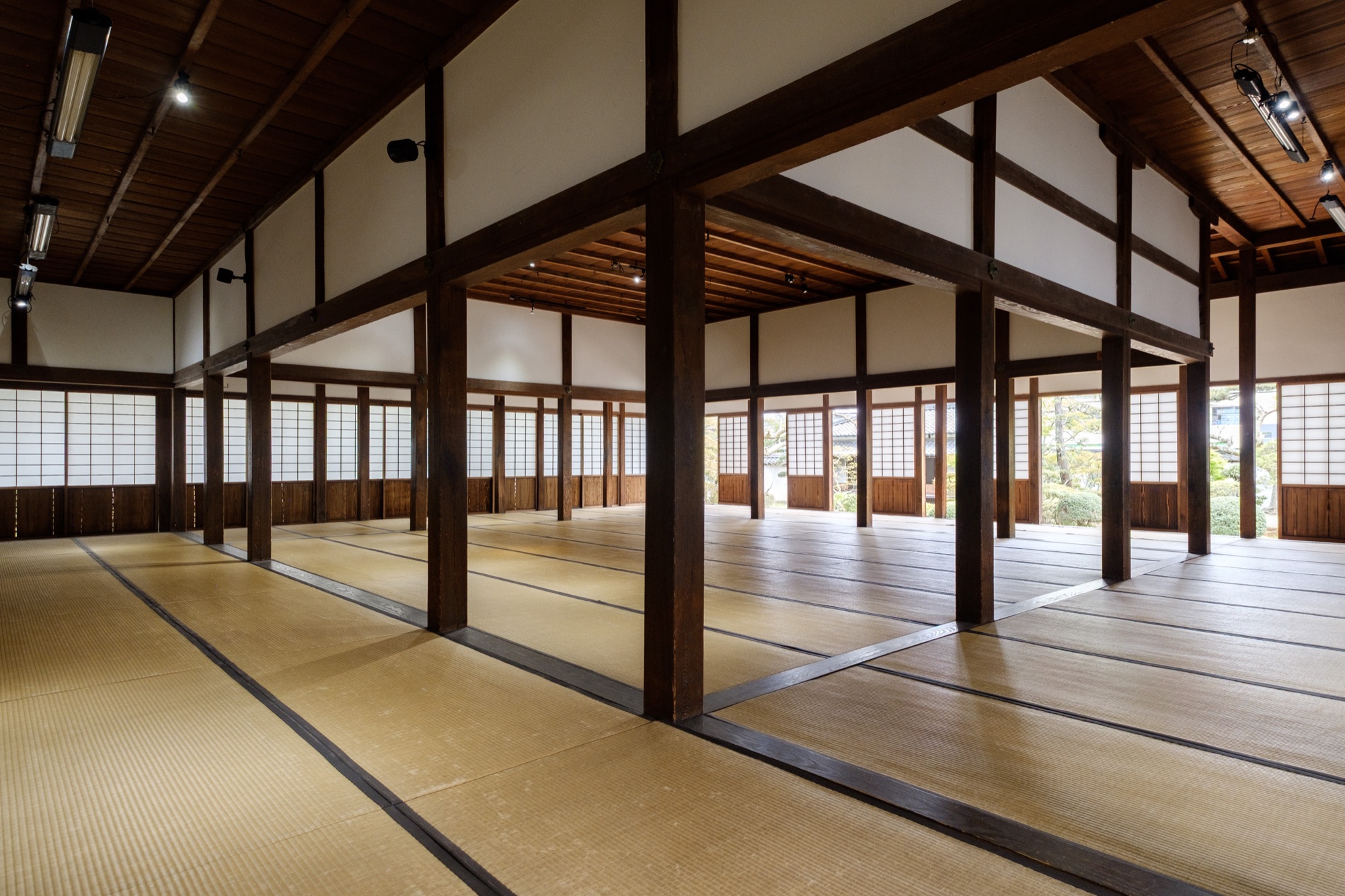
畳七十二枚を擁する大講堂。入側・内室・後室の三層に分かれながら、各室の境は柱だけで仕切られ、一室の大広間として開かれている。藩士子弟の学びの中心であり、本フェアでは最も大きな出展空間となる。
A grand lecture hall of seventy-two tatami mats — divided into three concentric zones (outer corridor, inner room, rear room), yet the boundaries are only freestanding columns, leaving the whole as a single open hall. Once the center of samurai education, now the fair's largest exhibition space.
02 / Exterior & Gardens
外観・庭園
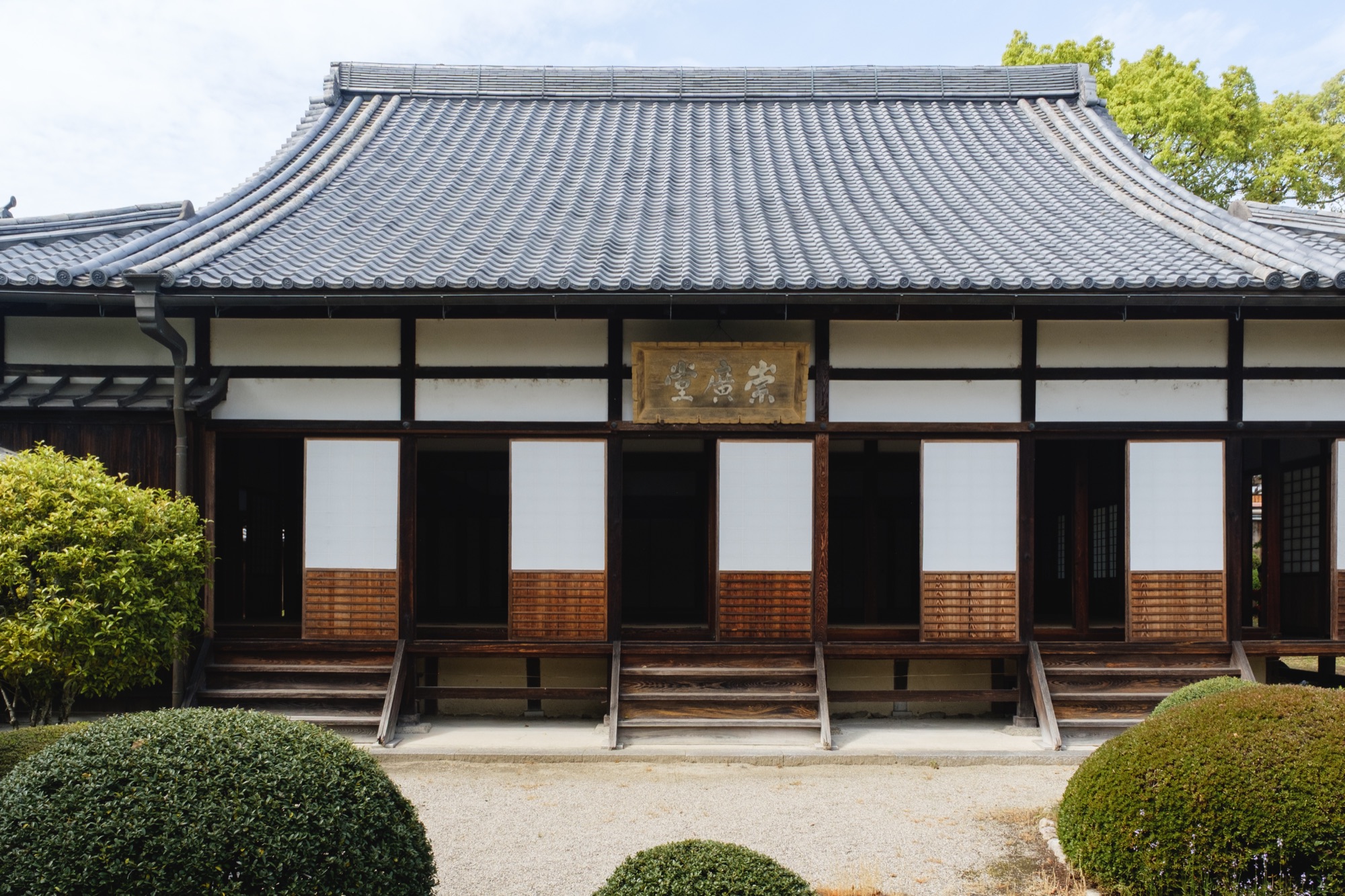
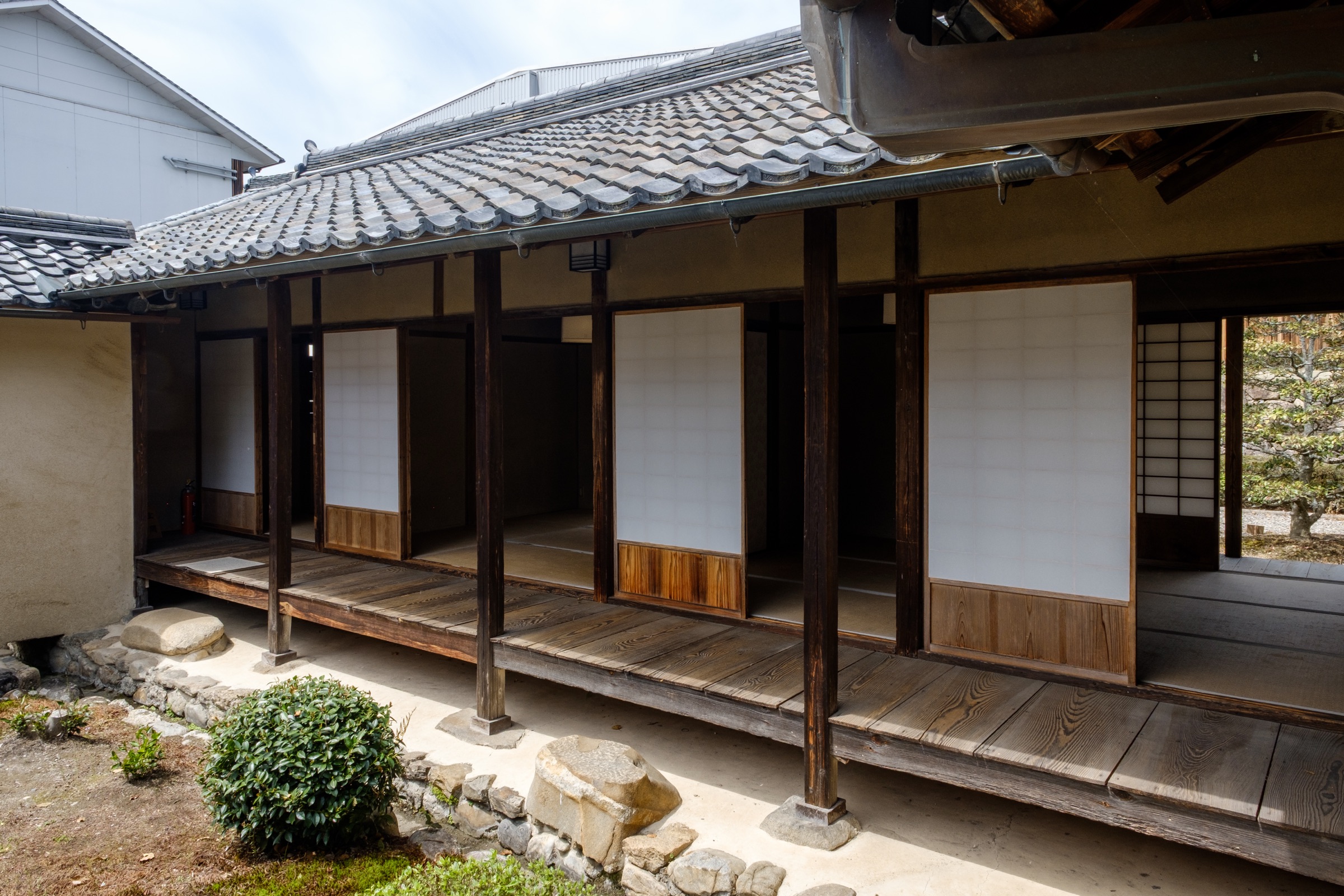
瓦と漆喰、木と緑が織りなす伊賀の風景の一部として、二百年の時間が積もる。
Tile and plaster, timber and greenery — two centuries settled into the Iga landscape.
03 / Entrance Wing
玄関棟
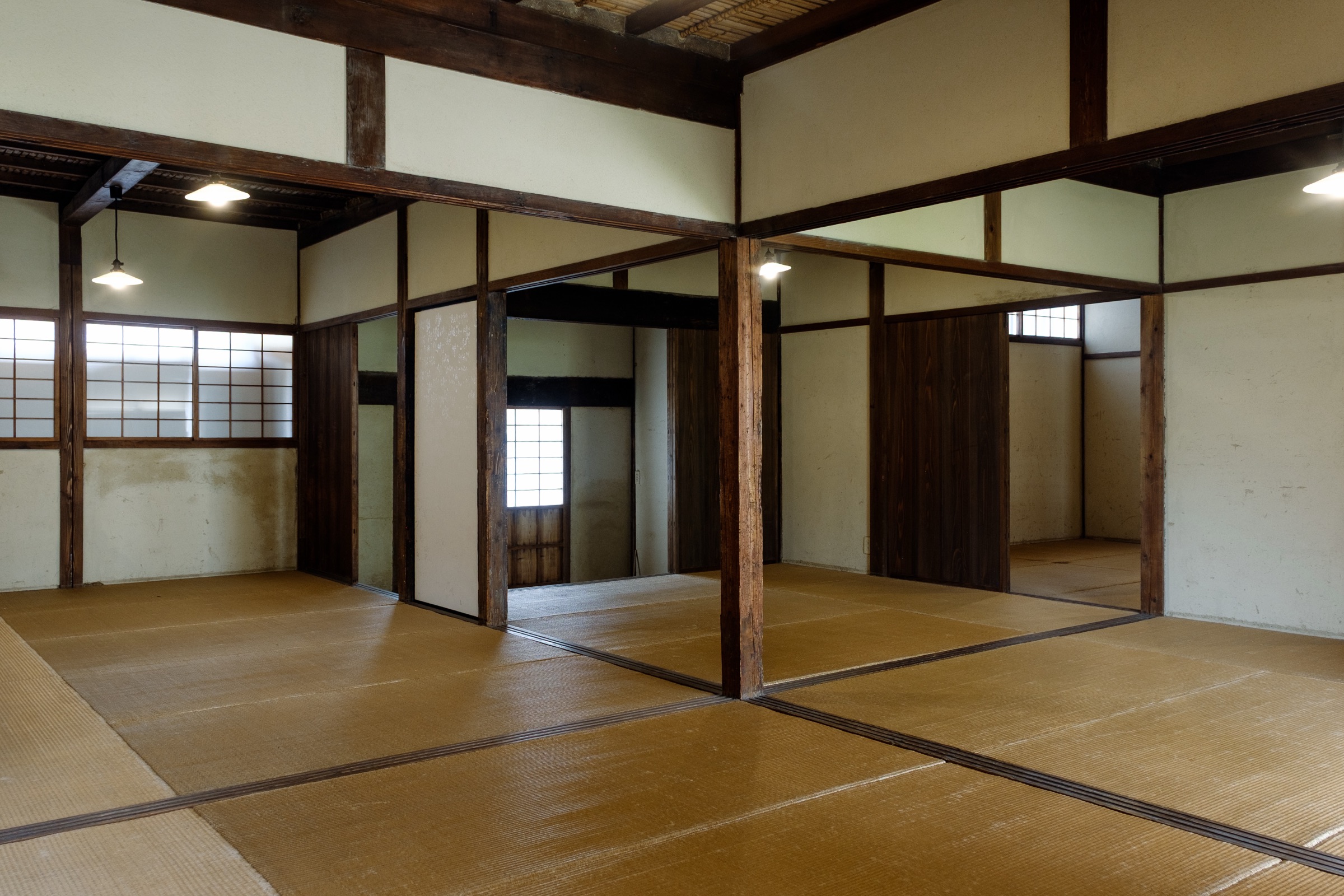
藩士子弟が日々通った玄関棟。正面に並ぶ三つの玄関は、それぞれ身分の異なる人々のための入口で、東側四室は教師の控え室として使われていた。畳と障子に縁取られた静けさの真ん中に、装飾の唐紙が一枚立つ。
The entrance wing through which generations of samurai children once arrived. The three entrances along the front facade each served a different social rank, and the four rooms on the east side were used as the teachers' antechamber. A single decorative karakami panel stands at the center of a quiet stage of tatami and shoji.
04 / Covered Walkway
渡り廊下
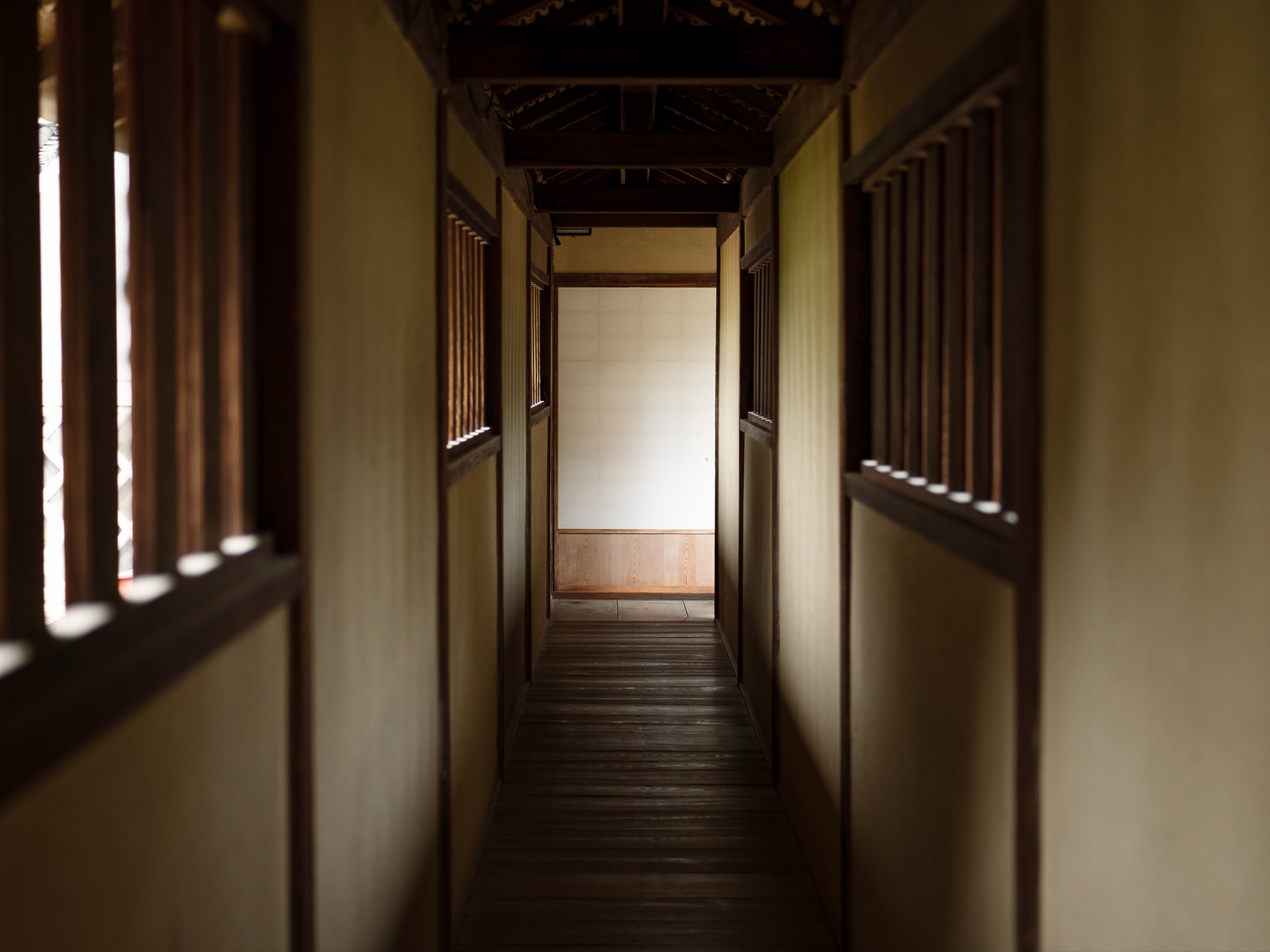
進むと、奥の書物蔵や北控所へと続く。藩主は東の小玄関から入った後、講堂の西側を経てこの渡り廊下を抜け、北控所の「休所」へと至った——光と影が静かに切り替わる、内部を縫う通路。
Continue along it and the path opens onto the book storehouse and north antechamber. The lord, after entering through the small east entrance, would pass along the lecture hall's western flank and through this very walkway to reach his resting room — a passage where light and shadow trade quietly, threading through the interior.
05 / North Antechamber
北控所
講堂の北側に建つ控所。藩主が登校した際の「休所」が置かれていた、藩校のもう一つの中心。展示ができる三室と屏風の間が連なり、本フェアの第二の舞台となる。
The antechamber to the north of the lecture hall — once home to the lord's resting room when he visited the school, a second center of the school's daily life. Three exhibition rooms and a byōbu-screened space, opening as the fair's secondary stage.
06 / Kitchen
台所
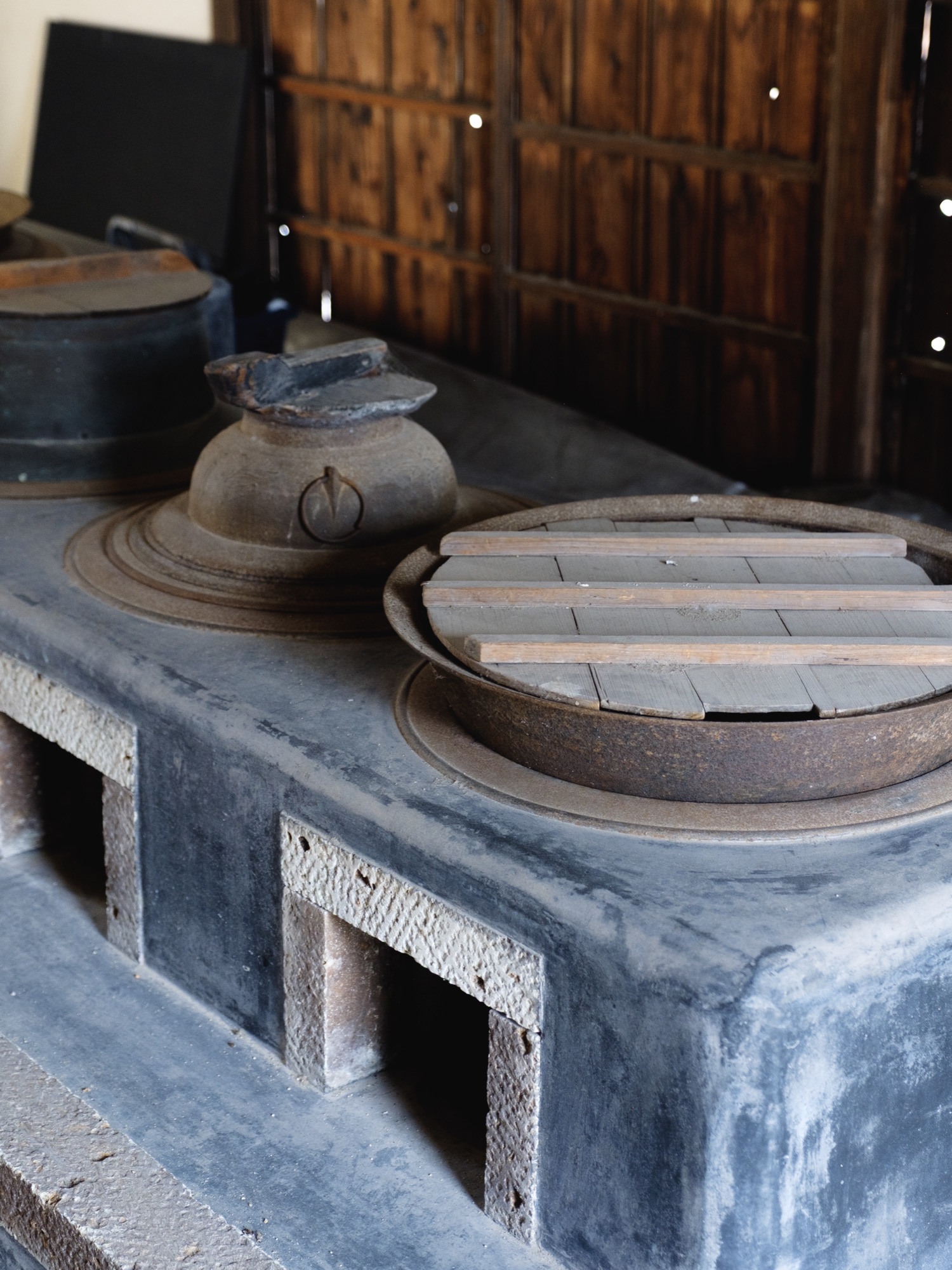
建築当時の生活の痕跡が、今も静かに残っている。玄関棟の西側四室と隣接し、竹小舞の根太天井の下で、藩校全体の日常を支えていた。
Traces of life from the building's earliest years still remain, undisturbed. Adjoining the west four rooms of the entrance wing, beneath a ceiling of bamboo lattice over exposed joists, the kitchen sustained the daily life of the entire domain school.
Details · 細部
二百年の手触りTwo Centuries, Up Close
屏風の間The Byōbu Room
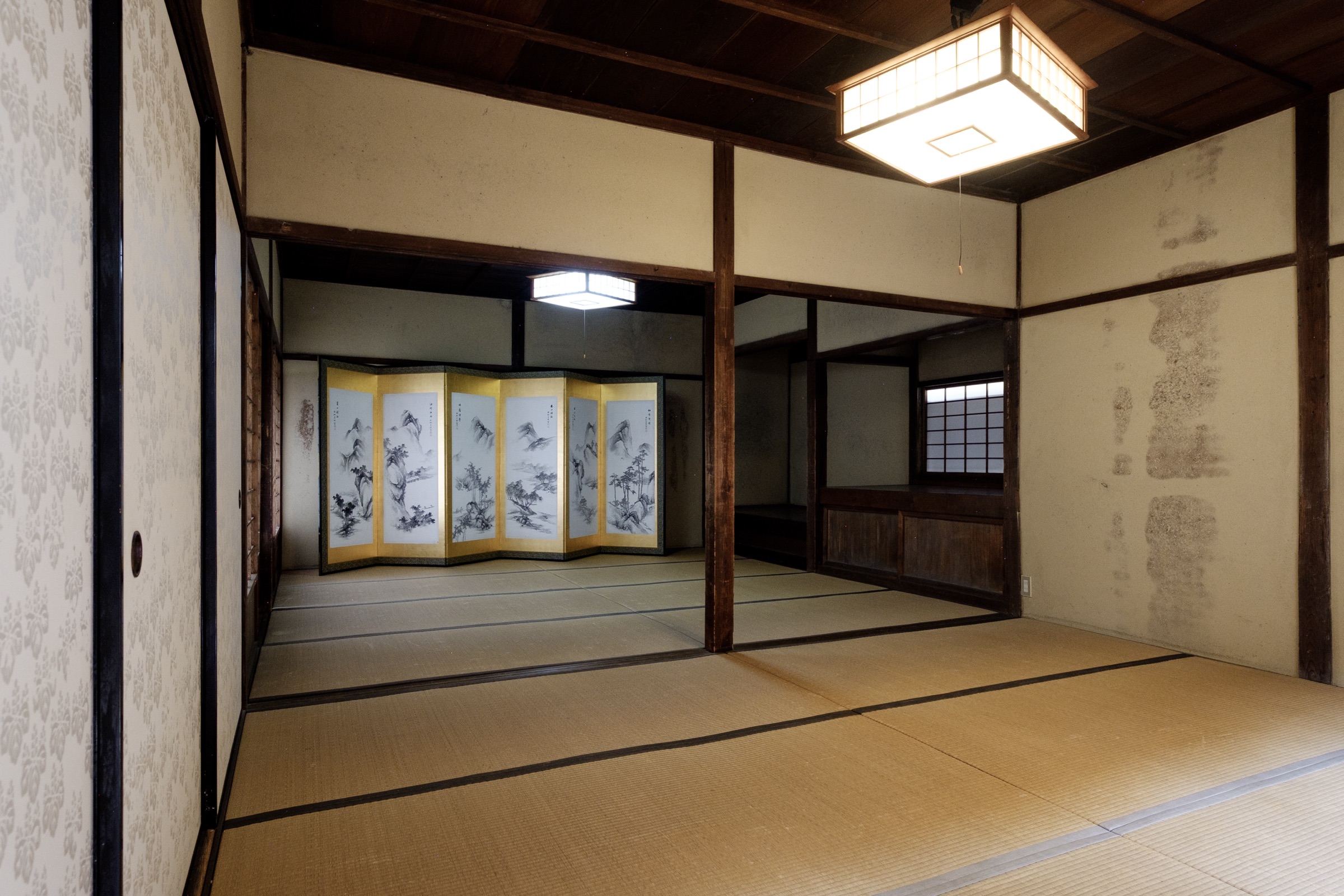
北控所の奥、桐紋の唐紙に囲まれた畳の間。屏風が静かに立つ、格式と静けさを宿した空間。
At the back of the north antechamber — a tatami room framed by paulownia-crest karakami. A folding screen stands quietly within, holding both formality and stillness.
襖の経年Worn Fusuma
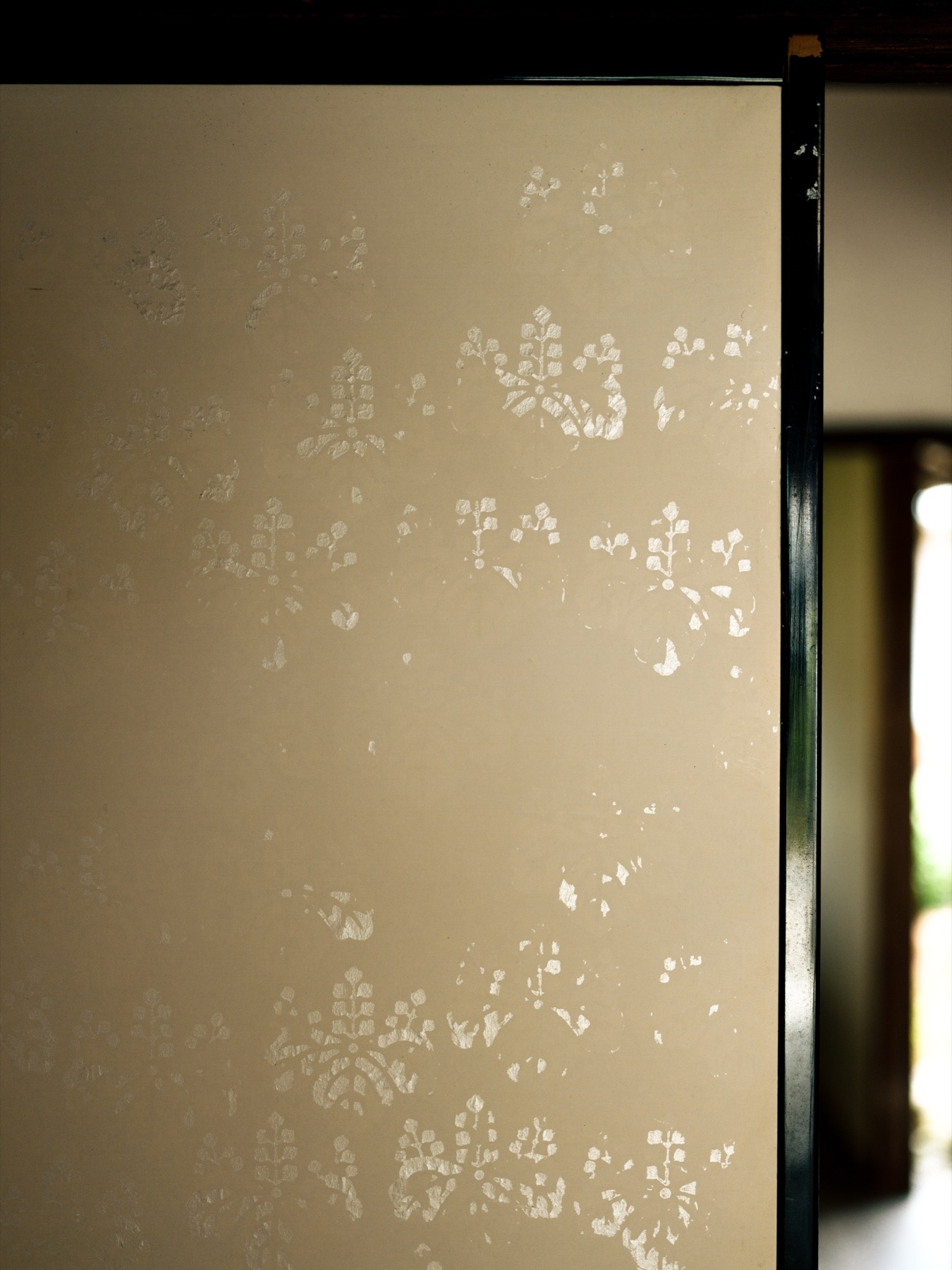
二百年の手と光が、襖の唐紙にやわらかな文様を残している。
Two centuries of hands and daylight have left soft patterns on the fusuma's karakami.
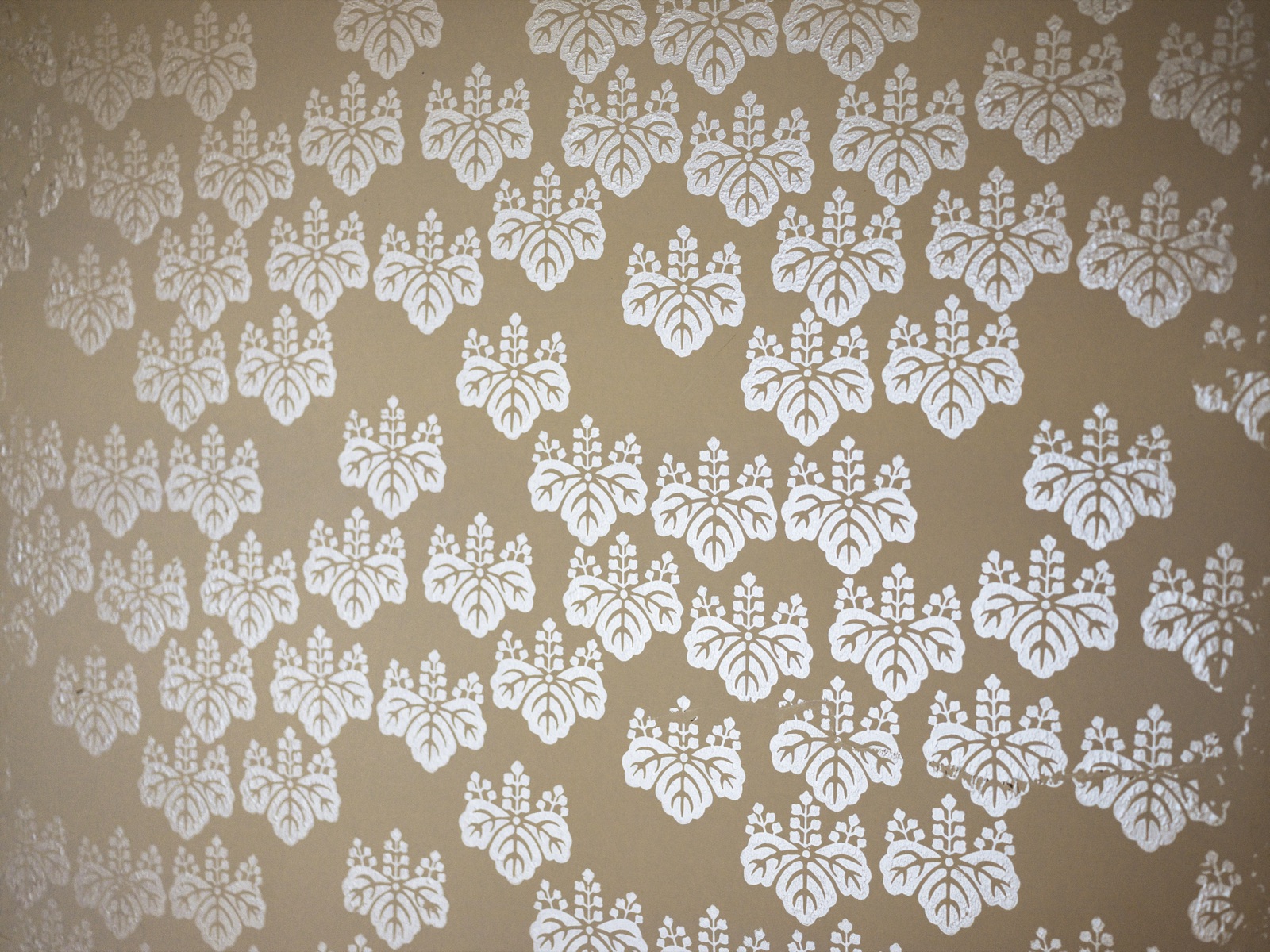
桐紋の唐紙Paulownia Karakami
五七桐の浮き出し模様——平安期に天皇家から下賜され、武家・公家へと広まった格式の意匠。
The five-seven paulownia crest in raised relief — a motif granted from the imperial household in the Heian era, later spreading among nobility and samurai.
Architectural Reading · 建物を読む
建物の計画The Building Plan
1821年、津藩第10代藩主・藤堂高兌が建立した崇廣堂は、藩校としての機能を最大限に活かすため、極めて意識的に設計された。「史跡 旧崇廣堂保存整備事業 第一期保存修理工事報告書」が記す、設計の核心を3つの視点から読み解く。
Built in 1821 by Tōdō Takasawa, the 10th lord of the Tsu domain, Sukodo was consciously designed to fulfill its role as a domain school. Drawing from the official conservation report's Section 6, "The Building Plan," three lenses through which to read the architecture.
01 / Three Entrances, Three Ranks
三つの玄関、身分の出入り
正面に並ぶ三つの玄関は、それぞれ異なる身分のために設計されていた。中央の大玄関は二間張り出した入母屋屋根、教師(藩士)の通用口。その東に張り出す小玄関は藩主登校の折のみ使われ、切妻屋根に式台を構え、屋根の本瓦には藤堂家の家紋「藤」の浮き彫りが残る。藩主の動線はここで終わらず、三畳の板間から正面を開放したまま講堂の西側板張りを経て、渡り廊下を抜け、北控所に置かれた「藩主の休所」へと至る——身分による玄関の差異だけでなく、藩主専用の空間的シークエンスが、建物のなかに組み込まれている。西寄り一間半の下玄関は土間を持ち、藩士子弟が日常的に出入りした入口。建物の正面ファサードに、藩校としての身分秩序がそのまま刻まれている。
Three entrances stand side by side across the front facade, each designed for a different rank. The central Ōgenkan, projecting two ken under a hipped-and-gabled roof, was the daily passage for teachers and samurai officers. To its east, the smaller Kogenkan — gabled roof, ceremonial step, eaves bearing the Tōdō family's wisteria crest — was used only when the lord himself entered. The lord's path did not end at the door: through a three-tatami threshold, past the lecture hall's open western corridor, and along a covered walkway, he proceeded to his "resting chamber" set inside the North Antechamber — a private spatial sequence built into the architecture itself. The western Shimo-genkan, a one-and-a-half-ken wing with an earthen entry floor, was the daily entrance for samurai children. The Edo-period social order is built into the very face of the building.
02 / An Architecture for Daylight
採光のための独立配置
崇廣堂の建築計画の核心は、自然光を徹底して採り入れる設計にある。藩校としての学習環境を確保し、同時に書物や木造建築にとって最大の脅威である火災を避けるため、行灯のような火を使う照明を必要としない計画が立てられた。七間四面という大規模な講堂は、四方すべてから光を取り込むために独立して建てられている。西側の玄関棟との間には中庭が設けられ、講堂の正面側にも光が回り込むよう配慮されている。報告書はこう記す——「これは、各棟を使用目的により区分し、文場としての機能を考え、建物内部を明るくするために計画された」。さらに、四周の軒は背を高く・出を短くし、側柱通りに腰高障子を引き込む構造により、季節と時刻に応じて室内の光量を調節できる。北側の障子を開けば、読書に最適な北からの間接光が室内を満たす。
At the core of Sukodo's architectural plan is a relentless commitment to natural daylight. To create a sound environment for study and to eliminate the open flames that posed the greatest threat to books and timber buildings, the design was conceived so no andon-style lamps would be needed inside. The seven-by-seven-ken lecture hall stands as an independent structure, allowing light to enter from all four sides; a courtyard was placed between it and the western entrance wing so light could reach its front face as well. The conservation report states: "These divisions were planned to give each building its function as a place of study, and to make the interiors bright." The eaves on all four sides are tall but shallow, and the waist-high shoji along the outer columns slide back to fine-tune the amount of light through the seasons and hours. Open the northern shoji, and the indirect light prized for reading fills the rooms.
03 / Inside the Lecture Hall — Ceilings and the Rank of Rooms
講堂の内部と、天井が語る部屋の格
講堂の内部は入側・内室・後室の三層に区分されている。各室の境界には柱だけが立ち並び、襖や壁で塞がれることはなく、畳七十二枚が同じ高さで一面に敷き込まれ、生徒は自由に座ることができた。ただし最奥の後室のみ、背面の入側通りに襖が建て込まれ、諸学を講じる場として整えられている。天井は外周(入側)で最も高く、内室、後室と段階的に低くなる構造で、講師の立つ位置を空間的に強調する設計——一つの大広間でありながら、明確な「中心」を持つ建築。 天井のあり方は、講堂のなかだけにとどまらない。藩校全体において、天井のかたちは部屋の身分・用途を直接表現する語法として働いている。整った板を細い棹で支える 棹縁天井(さおぶちてんじょう) は格式高い部屋に。露出した根太の間に竹小舞を敷く素朴な 竹小舞の根太天井(ねだてんじょう) は勝手向き・裏方の部屋に。たとえば玄関棟の 東側四室——教師の控え室として使われていた空間——は格を持った天井で整えられ、西側四室は台所と接するため、竹小舞の根太天井で組まれている。一棟のなかで天井の意匠が変わることで、その下にいる人の身分秩序が、頭上に書かれている。江戸期の藩校建築に共通する語法であり、崇廣堂もその例外ではない。
Inside the lecture hall, three concentric zones divide the space: the outer corridor (irigawa), the inner room (naishitsu), and the rear room (kōshitsu). The boundaries between zones are marked only by free-standing columns — no walls, no fusuma — leaving the interior as one continuous hall. Seventy-two tatami mats sit at a single floor level, and students could seat themselves freely. Only the rear room carries fusuma along the inner-corridor side, framing the position from which the master taught. Ceiling heights step down from the outer corridor toward the rear room, lifting the teacher's position into spatial prominence — a single great hall with a clear center. The ceilings, however, speak beyond the lecture hall. Across the school, the type of ceiling encodes a room's rank and function. The refined sao-buchi-tenjō — flat boards supported by thin wooden battens — was reserved for dignified rooms. The rustic take-komai over neda-tenjō — bamboo lattice between exposed floor joists — was used in service spaces. The four rooms on the east side of the entrance wing, which served as the teachers' antechamber, were finished with refined ceilings; the four rooms on the west side, adjoining the kitchen, used the bamboo-lattice-and-joist ceiling. Within a single building, the ceiling tells you the rank of those who used the room — written, quite literally, overhead. A vocabulary common to Edo-period domain school architecture; Sukodo is no exception.
04 / The Conservation Approach — A Building as Its Own Source
保存修理の方針——建物が語る、自らの過去
1984年の図書館移転後、本格的な保存整備事業が始まった。基本方針は単なる「現状の保存」ではなく、近代以降に変更された部分を 藩校時代の姿に戻す「復原」。柱の表面に残る埋木・釘穴・長押の痕跡といった「建物自身に残された証拠」から、文政4年(1821年)当時の意匠を読み解き、そこに戻していく。現状の長押が旧材を転用しつつ寸法不足を継木で補っていること、講堂と玄関棟の間の板間が昭和53年(1978年)に増設された後補であったこと——こうした事実が一つずつ確認され、押入の撤去、長押と鴨居の本来高への復原、通庭の復原などが順次進められた。建物が、自らの過去を語る一次資料となる。
After the library moved out in 1984, a full conservation programme began. Its principle was not mere preservation of the current state, but fukugen — restoration to the building's domain-school form. By reading the building itself — the wood patches, nail holes, and traces of removed kamoi lintels left in the columns — the original 1821 design was recovered piece by piece. Today's lintels, made of reused old timber spliced to make up for missing length; the wooden floor between the lecture hall and entrance wing, identified as a 1978 addition rather than an original feature — each finding was confirmed before closets were removed, lintels and kamoi were returned to their original heights, and the earthen courtyard between buildings was restored. The building becomes its own primary source.
本セクションの建築記述は『史跡 旧崇廣堂保存整備事業 第一期保存修理工事報告書』第六節「建物の計画」(pp.78–79)および第四節「現状変更」(pp.60–61)に基づく。
The architectural description above draws from "Sukodo Heritage Site Conservation Project: First-Phase Restoration Report," Section 6 "The Building Plan" (pp. 78–79) and Section 4 "Current State Modifications" (pp. 60–61).